Professional Tuning for Classical Musicians
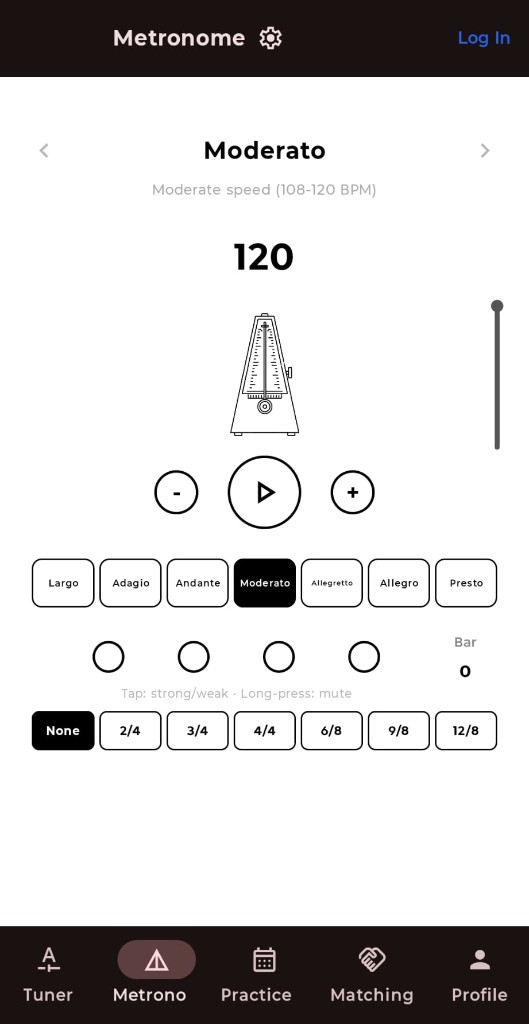
Classical musicians have long tuned by ear alone. This app follows that tradition — it trains your ear instead of replacing it, with a metronome, Practice Log, and Matching alongside.
Why Choose Tuner?
Built with precision and care for the classical music community
Train Your Ear
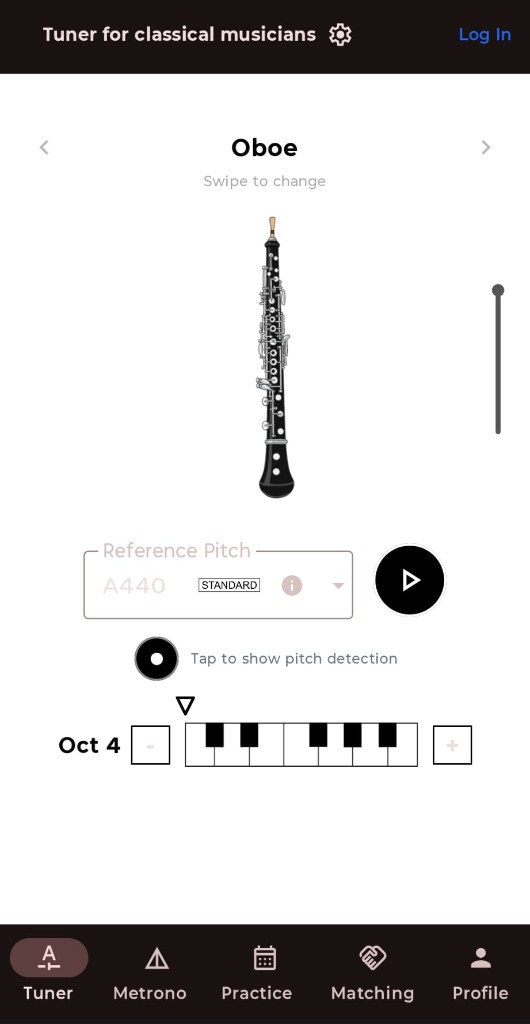
Built to train your ear, not replace it. Use pitch detection as a check — then wean off it and listen, the way classical musicians have always tuned.
Customizable Tuning Options
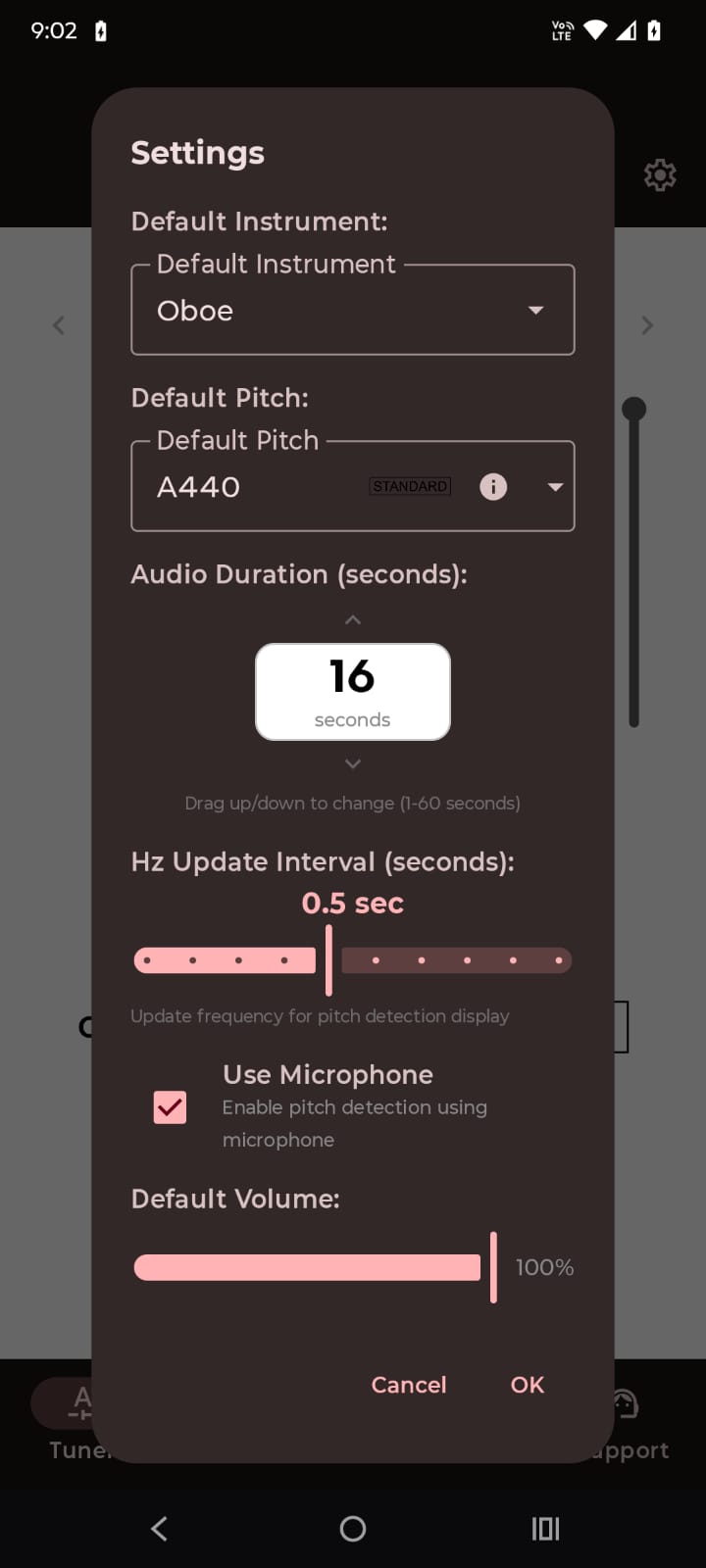
Choose a reference A from the dropdown — 415, 430, 440, 442, or 444 Hz — to match the ensemble you play in.
Practice Log & Matching
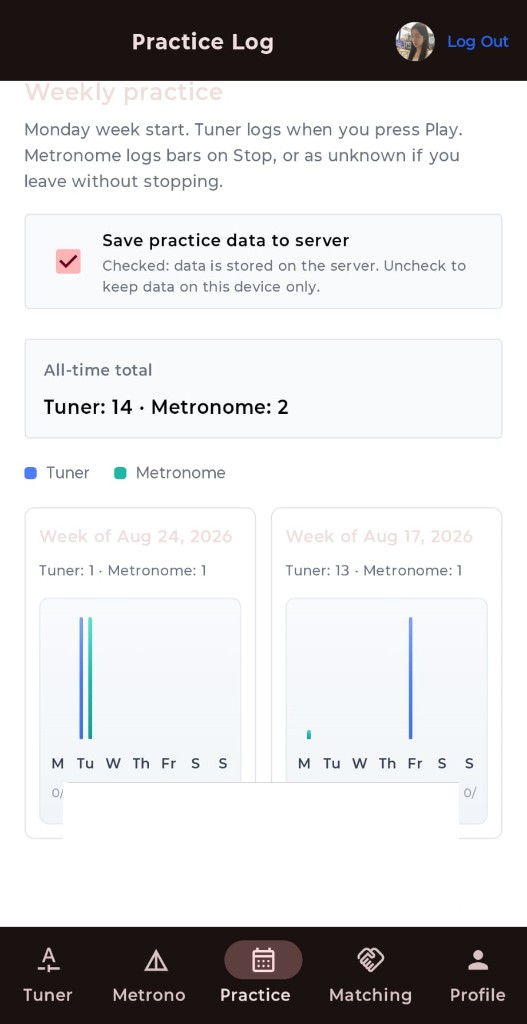
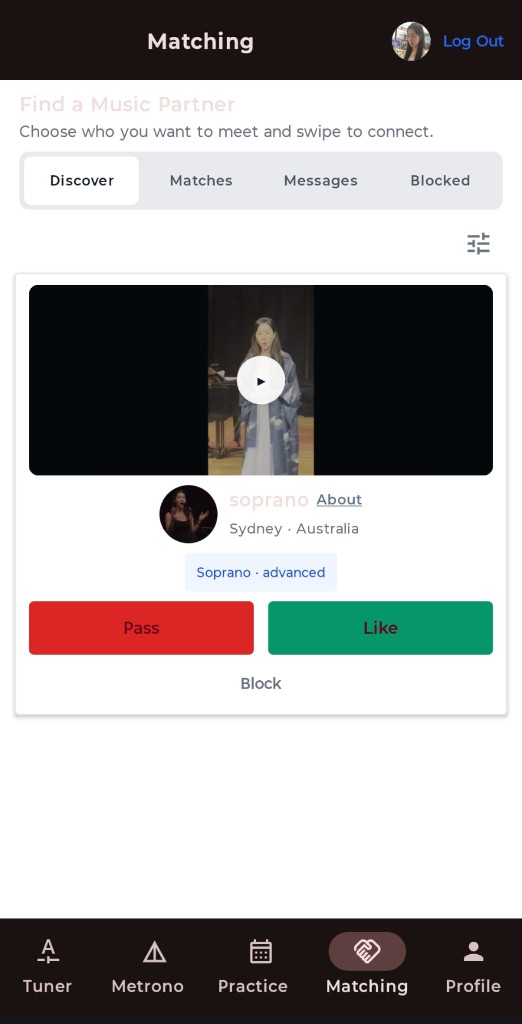
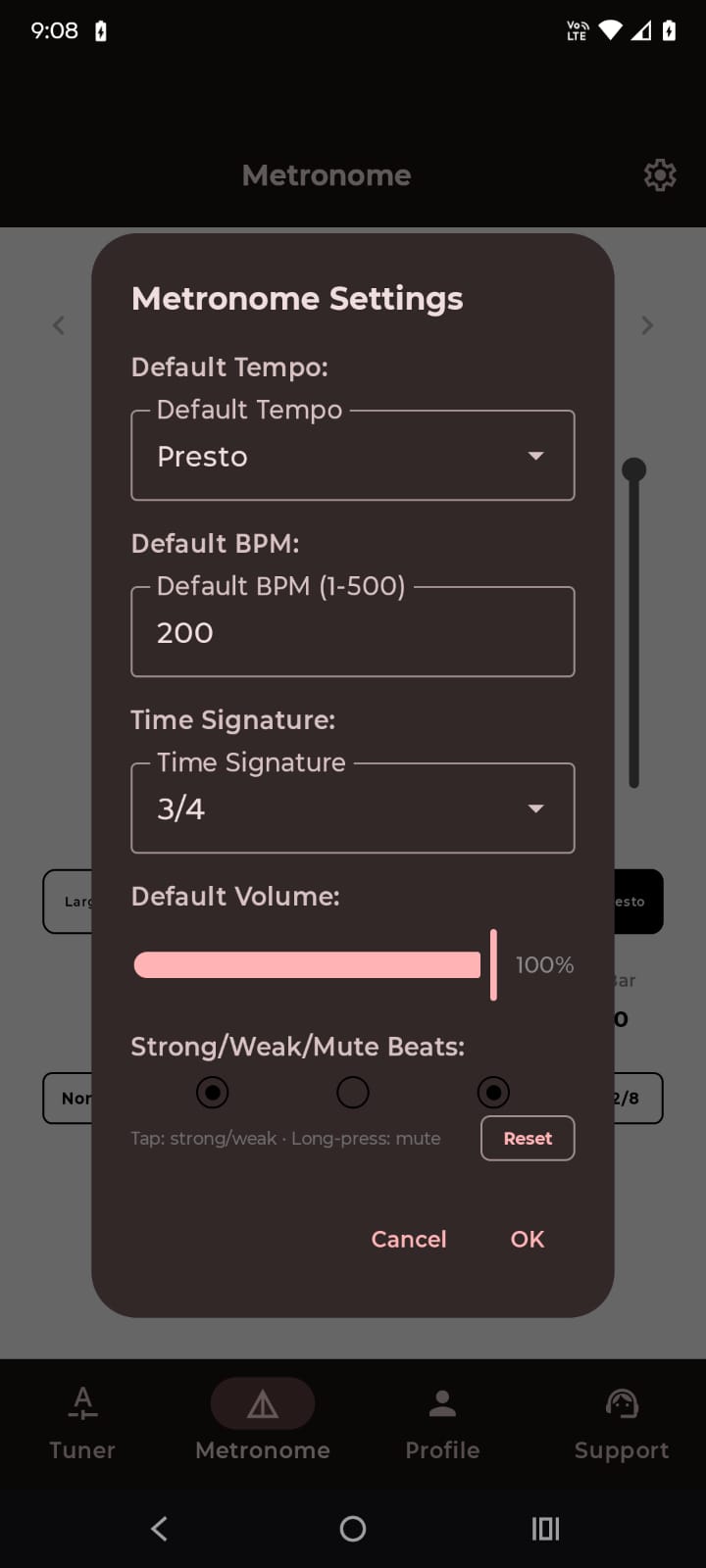
Track weekly Tuner and Metronome practice in Practice Log, and find music partners through Matching. Built for musicians who train together, not just alone.
Why Reference A Matters
Understanding the unique tuning approach of classical musicians
Ear-Based Tuning
Unlike other musicians who rely on electronic tuners for each note, classical musicians use their trained ears to tune relative to a reference pitch. This traditional method allows for more nuanced and expressive tuning that adapts to the musical context.
The process begins with a single reference note—the A above middle C (A4)—which serves as the foundation for tuning all other notes by ear. This approach preserves the natural harmonic relationships between notes that are essential to classical music performance.
The Classical Method
-
1. Reference A
Listen to the reference A note -
2. Tune by Ear
Adjust other notes relative to A -
3. Harmonic Balance
Achieve natural intervals and resonance
Variable A Frequencies
The reference A frequency varies depending on the musical context, ensemble, and historical period. Our app supports all standard frequencies used in classical music.
Baroque
Baroque pitch standard, about a semitone lower than modern A440, used for historical performances.
Classical
Classical period pitch, slightly lower than A440, used in historical accuracy performances.
International Standard
ISO standard pitch for A4, widely used in modern music worldwide.
European Standard
Common European orchestral pitch, sharper than A440 for a brighter tone.
Early 20th Century
Higher than A440, used for a brilliant sound.
Reach Classical Musicians Directly
Are you a luthier, music shop owner, or event organizer? Connect with our dedicated audience of professional and student classical musicians. No intermediaries, just direct, high-value advertising.
- Direct-to-app advertising (no AdMob)
- Auction-based pricing for maximum value
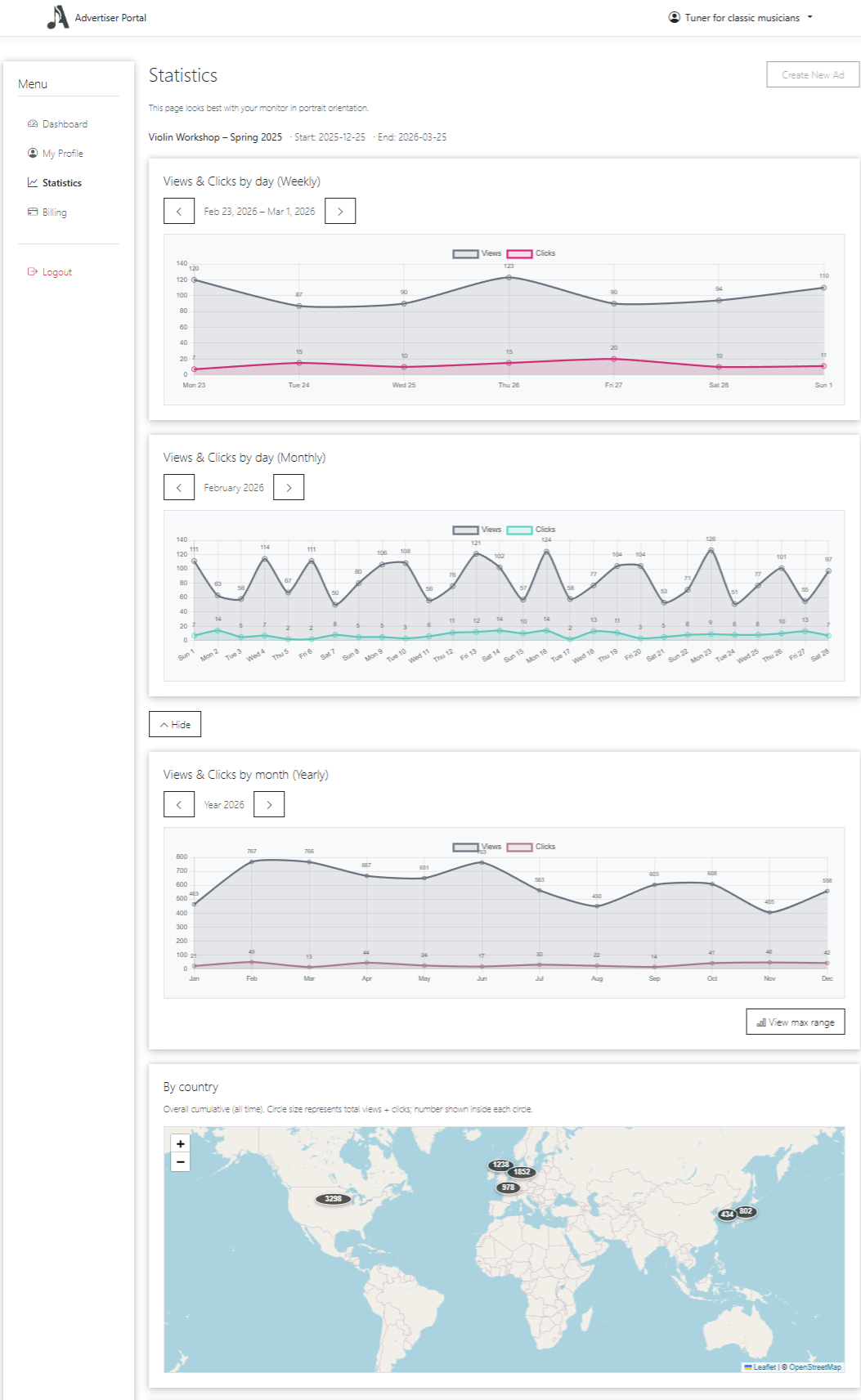
- Detailed analytics and raw data logs
Advertiser Portal
Manage your campaigns, track impressions, and download detailed reports directly from our portal.
Ready to Perfect Your Sound?
Classical musicians have long tuned by ear alone. Follow that tradition — train your ear for your own development.
Download on Google Play